Look-Alike Domain Scams in the UK: How They Work, Who’s at Risk, and How to Stay Safe

Subscribe for updates
Great things сome to those who sign up.
Get expert advice on accounting, marketing and business, right in your inbox each week.
subscribing!
As more business and personal activity moves online, fraudsters are becoming increasingly skilled at designing fake websites that are almost indistinguishable from authentic sites. One of the most insidious tactics they use involves look-alike domains - web addresses crafted to mimic legitimate websites so convincingly that even cautious users can be deceived. These deceptive domains are now a common tool in fraud, phishing, brand impersonation, and financial crime.
For consumers and businesses alike, particularly those engaging with financial services, understanding the risks associated with look-alike domains is a growing priority.
The Mechanics of Look-Alike Domains
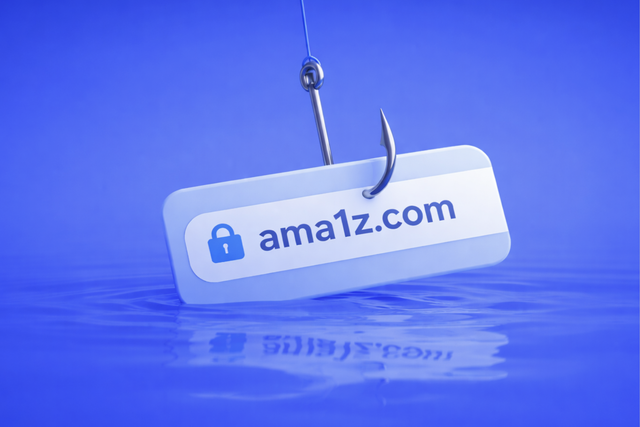
Look-alike domains rely on subtle variations in the URL to mislead users. These variations might consist of a single character change, where “l” becomes “1,” or a different domain extension such as .co instead of .com. They may also use homograph attacks, where characters from non-Latin alphabets (like Cyrillic “a” or Greek “o”) are substituted to visually replicate the real domain in a browser bar.
To the untrained eye, these differences are almost impossible to detect at a glance. Yet, once a victim visits such a domain, the consequences can be severe: fake login pages may steal credentials, cloned contact forms extract personal data, and payment portals capture financial details.
These tactics aren’t theoretical. In 2024 alone, cybersecurity researchers identified over 30,000 look-alike domains impersonating major global brands, with roughly one-third confirmed as malicious. This sharp rise reflects a broader surge in domain-based scams designed to harvest data, steal credentials, and mislead users through convincing impersonation.
FCA Warnings: Fraudsters Impersonating Trusted Authorities
In the UK, the Financial Conduct Authority (FCA) has been explicit about the increasing prevalence of scams that use fake communications and cloned websites to trick people into sharing sensitive information or transferring money. These fraudulent campaigns often mimic communications from trusted organisations — including the FCA itself.
In a 2025 press release, the FCA revealed that almost 5,000 fake FCA scams were reported in the first half of the year, with hundreds of victims tricked into sending funds or providing critical information to fraudsters. These scams frequently involve domains or email addresses that appear to be official but are in fact fraudulent.
The FCA’s guidance makes clear that the regulator will never ask individuals to transfer funds to it or request sensitive banking details such as PINs or passwords. Genuine FCA communications always come from official domains ending in @fca.org.uk, and the FCA stresses that communications using other addresses should be treated with scepticism.
This warning extends beyond emails. The FCA has also highlighted the existence of fake versions of its own website and cloned social media accounts designed to lure unsuspecting visitors. The official FCA website always begins with https://www.fca.org.uk or https://register.fca.org.uk/s/, and any variation from these domains should raise immediate concern.
A £1 Million Lesson: How a UK Charity Fell Victim to a Look-Alike Domain Scam
To understand the real-world impact of look-alike domains, one needs only look at the case of Red Kite Community Housing, a not-for-profit housing provider based in High Wycombe, Buckinghamshire.
In late 2019, Red Kite became the victim of a highly targeted cyber scam that combined social engineering, email spoofing, and a fraudulent domain designed to mimic a trusted contractor. The fraudsters had done their homework. They knew who Red Kite worked with and how payments were processed. With this insight, they registered a look-alike domain that was almost identical to a contractor Red Kite regularly communicated with.
The attackers inserted themselves into an existing email chain between Red Kite and the contractor, using the spoofed domain to take control of the conversation. It was so subtle and well-timed that no red flags were initially raised. The finance team received what appeared to be a routine request to update bank details for future payments - something that occasionally happens in large organisations.
Red Kite had a two-stage verification process in place to prevent exactly this kind of fraud. However, on this occasion, processes weren’t strictly followed, and the change was accepted. Before the fraud was discovered, over £1 million had been transferred to the fraudsters’ account.
The emotional and operational impact on the organisation was immediate. Red Kite’s CEO at the time, Trevor Morrow, acknowledged the gravity of the situation publicly, noting how the incident had shaken the organisation and served as a wake-up call, not just for internal operations but for the wider charity and housing sectors.
What made this scam so effective wasn’t just the technology - it was the psychology. The fraudsters understood how trust and routine can create blind spots. As mentioned in Red Kite’s public account, the fraudsters mimicked the domain and email details of known contacts that were providing services to Red Kite. Through this they managed to recreate an email thread that misled those who were copied into the email that it was a genuine follow up to an existing conversation.
In the aftermath, Red Kite revised its internal financial processes, conducted an in-depth audit, and invested heavily in staff training and verification protocols. The incident also contributed to broader awareness across the non-profit sector of the growing threat posed by look-alike domains and email-based fraud.
How These Scams Unfold
In many cases, look-alike domain scams begin with unsolicited contact - an email, a text message, or a notification that looks strikingly like a genuine alert from a reputable organisation. The message might claim to be a regulatory notice, a payment reminder, or a “security alert” requiring immediate action.
Once a user interacts with the deceptive link, they may be directed to a convincing clone of a legitimate login page. Here, whatever credentials are entered - usernames, passwords, payment details - are captured by the fraudster. Some scams go further, instructing users to transfer money for “verification” fees, “recovery of lost funds,” or supposed penalties - all of which are designed to trick the victim.
One particularly pernicious tactic doubles down on earlier victimisation. A fraudster may first draw someone into a financial scam elsewhere, and then, using that information, send a convincing phishing email impersonating a regulator such as the FCA, claiming to help recover those lost funds - but only if the victim sends further payments or sensitive login details. This layered deceit makes scams harder to spot and increases the risk of financial loss.
Why Look-Alike Domains Work
At their core, look-alike domain attacks take advantage of human trust and the fact that many people do not scrutinise URLs closely - especially when they believe they are dealing with a reputable organisation. Cybercriminals are also adept at using automation to spin up hundreds of domain variants at low cost, making detection by automated filters challenging.
Even well-designed security tools can struggle with newly registered domains that are dormant until used in a scam campaign, or with homograph tricks that leverage internationalised domain name standards to render non-Latin characters that look identical to Latin ones in a browser’s address bar.
For businesses, the stakes are particularly high: a successful domain spoof can lead to invoice fraud, loss of confidential communications, damage to brand trust, and more. In the UK’s digital economy, industry reporting shows that look‑alike domain attacks can result in financial losses often exceeding £40,000 and, in some cases, over £160,000 per incident - illustrating how pervasive and damaging this threat has become.
Defending Against the Threat
Combatting look-alike domain fraud requires a combination of technological defences, informed awareness, and proactive, preventative measures:
- Verify all URLs manually - don’t click links in unexpected emails; instead, type the official domain into your browser.
- Check firm authorisation using the FCA’s Firm Checker or Financial Services Register before engaging with any financial services offer.
- Report suspicious activity to the FCA and through the UK’s national reporting centre, Report Fraud, so that regulators can track emerging scam patterns and help prevent others from being targeted. The FCA’s guidance directs anyone who suspects a scam to report it using their online form or by contacting Report Fraud on 0300 123 2040.
- Educate teams and clients about the common signs of scam communications, including unexpected urgency, requests for personal or financial data, and mismatched domain names.
Conclusion: Awareness Is Your Strongest Defence Against Scams
Look-alike domains are more than just a digital threat - they’re a tool for serious fraud. As fraud tactics evolve, both individuals and businesses should keep a close eye on what they trust online, checking URLs carefully, verifying contact details independently and understanding the strategies used by fraudsters.
Following official guidance from regulators like the FCA and staying informed about current scams can help users avoid being caught out by convincing online scams.
Download now!
And you can open a business account with all the support you need in minutes.


